
Building cloud-based applications with years of expertise
We understand that modern businesses require more than just storage; they need intelligent, scalable ecosystems. Lexogrine leverages deep expertise in cloud architecture to build resilient infrastructures that drive innovation. Whether you are a startup looking for a serverless MVP or an enterprise needing complex microservices orchestration, our seasoned team ensures your transition to the cloud is seamless, secure, and cost-effective. We turn "the cloud" into a competitive advantage
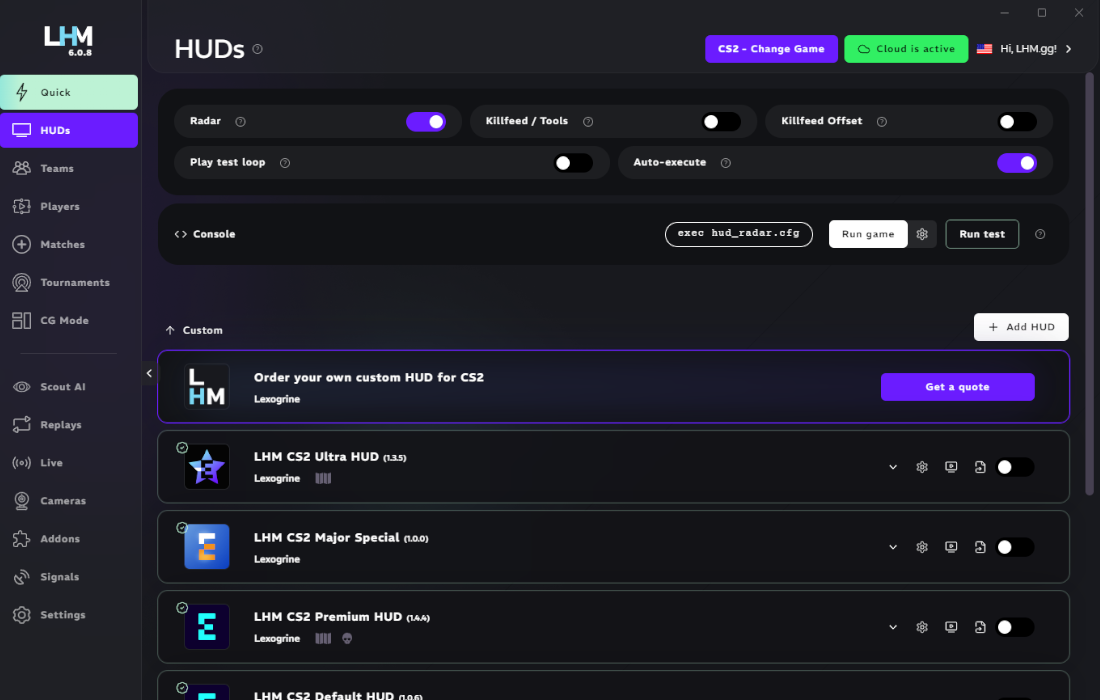
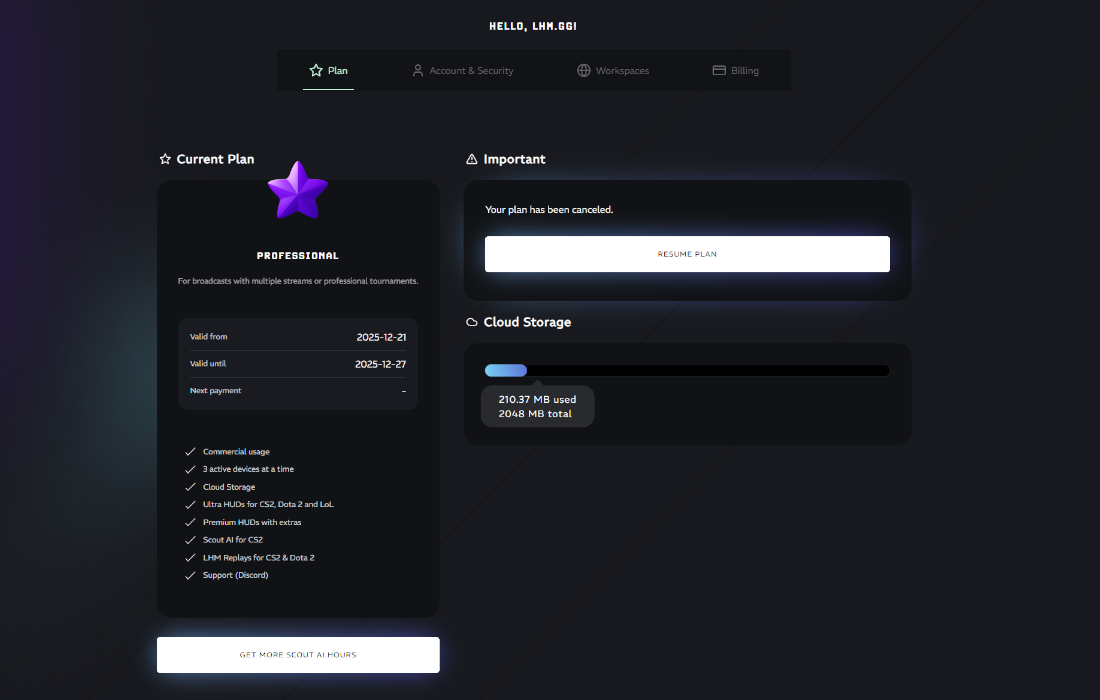

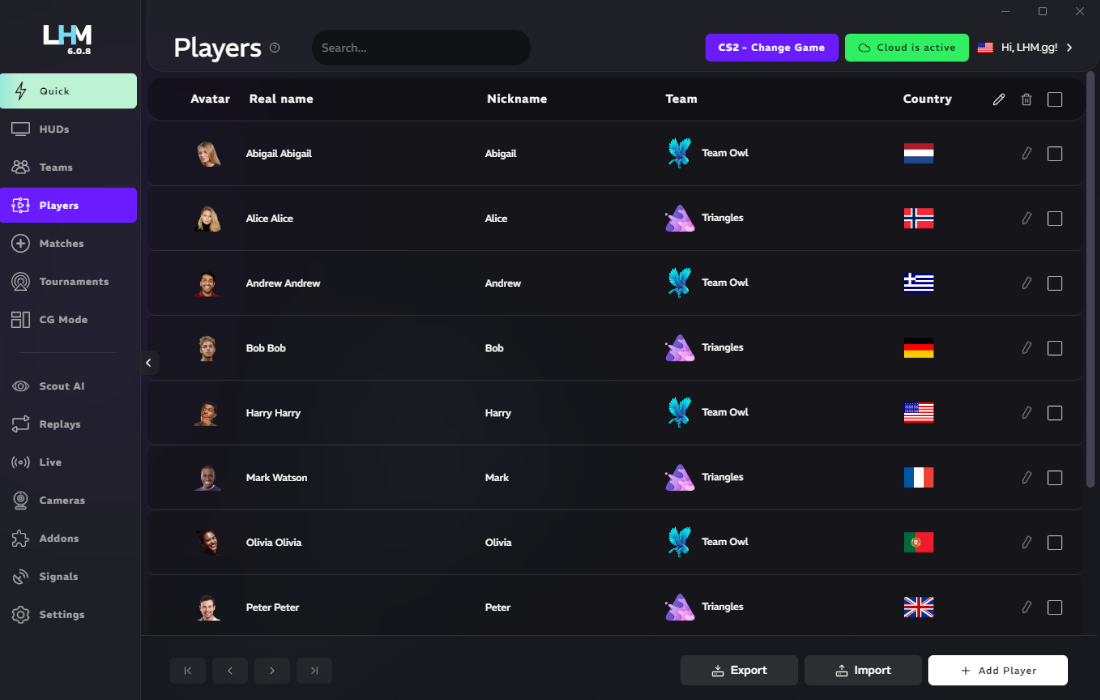
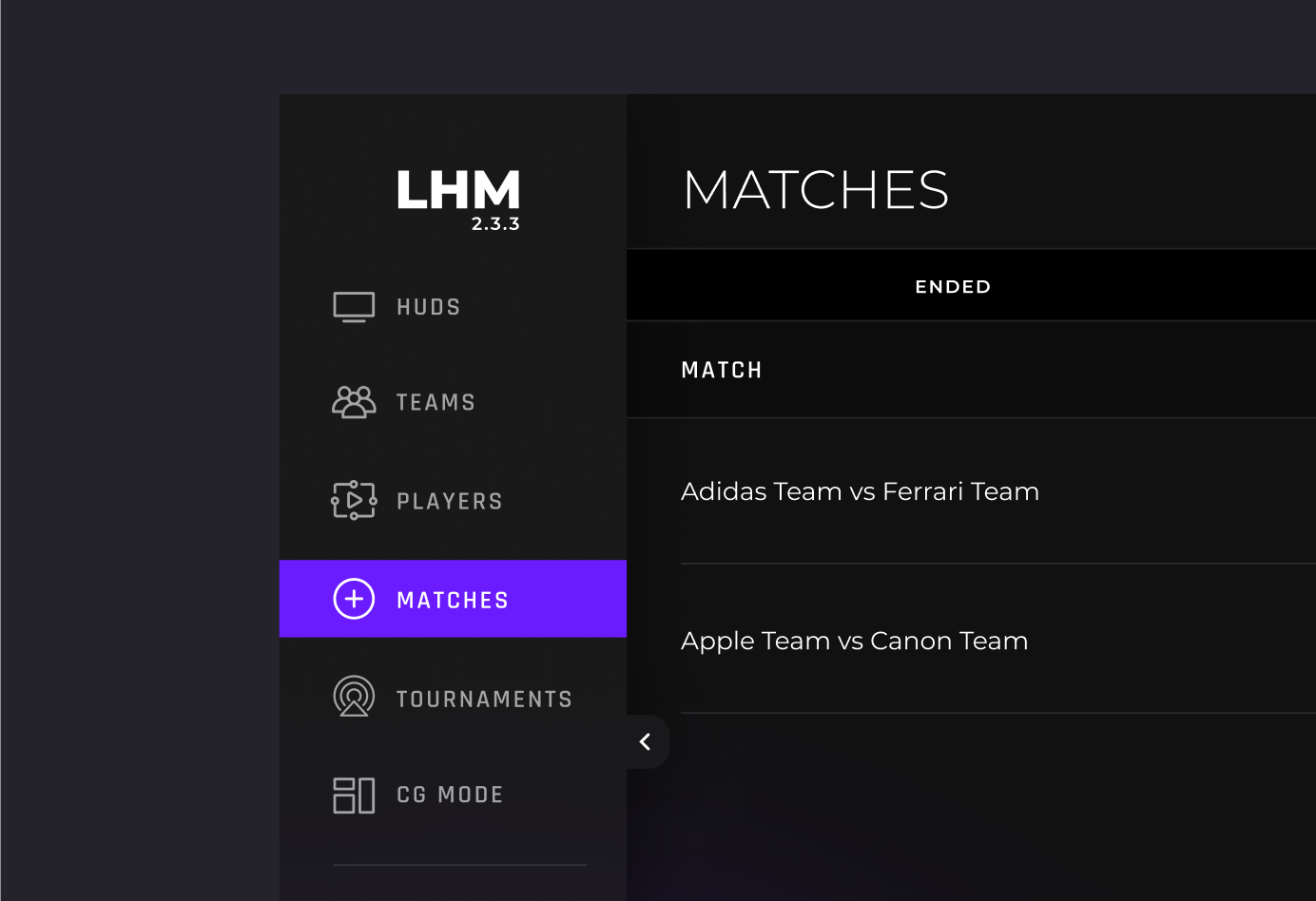
LHM.gg - using the full power of AWS
LHM.gg - Lexogrine HUD Manager - is leading esport production and automation cloud platform and desktop application, used by thousands of companies, broadcast specialists, and entertainment experts. The LHM Cloud platform is built on top of AWS, using a set of different services - like Amazon S3 and Amazon EC2 - to handle hundreds of events streamed for hundreds of thousands of people every day.
Our Core Cloud Services
As a full-service cloud development company, we provide end-to-end solutions tailored to your operational needs.
Custom Cloud Application Development
We build cloud-native applications from the ground up, using battle-tested technologies like React, Node.js, and Prisma. By utilizing microservices architecture and containerization, we ensure your software is designed to scale automatically with demand. Our focus is on creating resilient applications that maximize uptime and performance, ensuring your users get a consistent experience regardless of traffic spikes.
AWS & GCP Setup and Configuration
Setting up a cloud environment correctly is crucial for security and cost management. We handle the complete provisioning of your infrastructure on Amazon Web Services (AWS) or Google Cloud Platform (GCP). From defining Virtual Private Clouds (VPC) to configuring Identity and Access Management (IAM), we lay a rock-solid foundation for your digital assets.
Cloud Migration & Modernization
Legacy systems can hold your business back. We specialize in "lift and shift" strategies as well as complete refactoring of on-premise applications for the cloud. We minimize downtime during migration and optimize your existing code to take full advantage of cloud capabilities, resulting in lower operational costs and higher agility.
DevOps & CI/CD Automation
Speed to market is key. We implement robust DevOps practices and Continuous Integration/Continuous Deployment (CI/CD) pipelines. This automation allows for rapid code testing and deployment, significantly reducing the time between writing code and delivering value to your users, all while maintaining high quality and stability


Top Cloud Technologies We Master (AWS & GCP)
To deliver the best results, a top-tier React development company must utilize the right tools. We integrate the most powerful libraries to supercharge your application
Amazon Web Services (AWS) Solutions
Amazon EC2 (Elastic Compute Cloud)
Next.js is the industry standard for production-grade React applications. We use Next.js to implement Server-Side Rendering (SSR) and Static Site Generation (SSG). This is crucial for SEO performance, ensuring your application ranks higher in search results while providing lightning-fast load times for users.
Amazon S3 (Simple Storage Service)
Managing data in complex apps requires precision. We utilize Redux Toolkit for predictable global state management and TanStack Query (React Query) for efficient server-state synchronization. This combination ensures your app handles data fetching, caching, and synchronization seamlessly, eliminating glitches and loading lags.
Amazon RDS (Relational Database Service)
Speed of delivery meets aesthetic excellence. We leverage utility-first frameworks like Tailwind CSS for custom, rapid styling, or comprehensive libraries like Material UI (MUI) for enterprise-grade design systems. This ensures your application is not only functional but also visually consistent and accessible across all devices. When you need a complicated visual approach tailored exactly to your needs, we employ SCSS to achieve pixel-perfect implementation perfectly fitting your brand identity.
AWS Lambda (Serverless Computing)
While not a library, TypeScript is essential to our React workflow. By adding static typing to JavaScript, we drastically reduce runtime errors and bugs. This results in a more stable application and a faster development cycle, giving you a reliable product that is easier to maintain in the long run.
Google Cloud Platform (GCP) Solutions
Vertex AI & Gemini Models
We leverage the power of Vertex AI to build and deploy enterprise-ready generative AI applications. By integrating Gemini Pro and Ultra models, we enable multimodal capabilities in your software—allowing it to process and reason across text, code, images, and video simultaneously.
Imagen on Vertex AI
For businesses needing visual creativity at scale, we implement Imagen. This text-to-image technology allows your applications to generate high-quality, photorealistic images from textual descriptions, perfect for dynamic content creation and personalized user experiences.
Gemini API Integration
We directly integrate the Gemini API into your existing stack to automate complex tasks, from advanced natural language processing and chatbots to code generation and semantic search, ensuring your app stays ahead of the curve.
BigQuery with AI capabilities
Data is the fuel for AI. We utilize BigQuery not just as a data warehouse, but as an engine for machine learning. We set up data pipelines that allow you to run ML models and predictive analytics directly on your data without moving it, reducing latency and costs.
Synergizing Cloud with modern tech stacks
Lexogrine stands out because we don't view cloud infrastructure in a vacuum. We act as a cloud development company that integrates infrastructure deeply with your application stack.
Cloud + Node.js
Node.js is the perfect companion for cloud environments due to its non-blocking I/O model. We deploy lightweight Node.js microservices on AWS Lambda or Google Cloud Functions to handle thousands of concurrent connections with minimal resource usage.
Cloud + AI (Artificial Intelligence)
AI requires immense computational power and data storage. We leverage cloud-native AI tools like Amazon SageMaker or Google Vertex AI to build, train, and deploy machine learning models. We connect these models to your custom software to enable features like predictive analytics or natural language processing.
Cloud + React
Modern front-end applications require global availability. We deploy React applications using global Content Delivery Networks (CDNs) like CloudFront or Cloud CDN. We also utilize server-side rendering (SSR) via cloud compute instances for better SEO.
Cloud + React Native
Mobile apps require robust backends to handle user data and authentication. We use solutions like AWS Amplify or Firebase (GCP) to provide React Native apps with real-time databases, secure authentication, and offline synchronization capabilities.
FAQ - Frequently Asked Questions about Cloud Services
Why should I hire a specialized cloud development company like Lexogrine?
Hiring a specialized company ensures you avoid common pitfalls like over-provisioning (paying for more server space than you need) and security vulnerabilities. Lexogrine brings years of experience in optimizing cloud architecture for both performance and cost.
How do you handle cloud security?
Security is our priority. We implement industry best practices, including data encryption (at rest and in transit), rigorous IAM (Identity and Access Management) policies, VPC isolation, and regular security audits to protect your infrastructure.
Can you migrate my existing app to the cloud without downtime?
Yes. We use strategies like Blue/Green deployment or Canary releases. This allows us to switch traffic to the new cloud infrastructure gradually, ensuring zero downtime and immediate rollback capabilities if needed.
How do you optimize React, React Native, and Node.js applications on AWS?
We treat the infrastructure as an extension of your code. For Node.js, we often utilize AWS Lambda to create serverless architectures that scale automatically with traffic. React web applications are typically hosted on Amazon S3 and accelerated via CloudFront (CDN) for lightning-fast global loading. For React Native mobile apps, we integrate tools like AWS Amplify or AppSync to handle secure authentication, offline data synchronization, and real-time updates seamlessly.
Which is better for my project: AWS or Google Cloud?
Absolutely. Cloud environments require monitoring. We offer ongoing maintenance packages to monitor system health, apply security patches, and optimize costs as your user base grows.
Voices of trust and satisfaction

5.0

Lexogrine was even able to add features and improve the platform’s speed in a mere week!

Lexogrine successfully delivered the MVP despite the limited time.

It was obvious that Lexogrine wanted to create the best possible solution customized for us.